
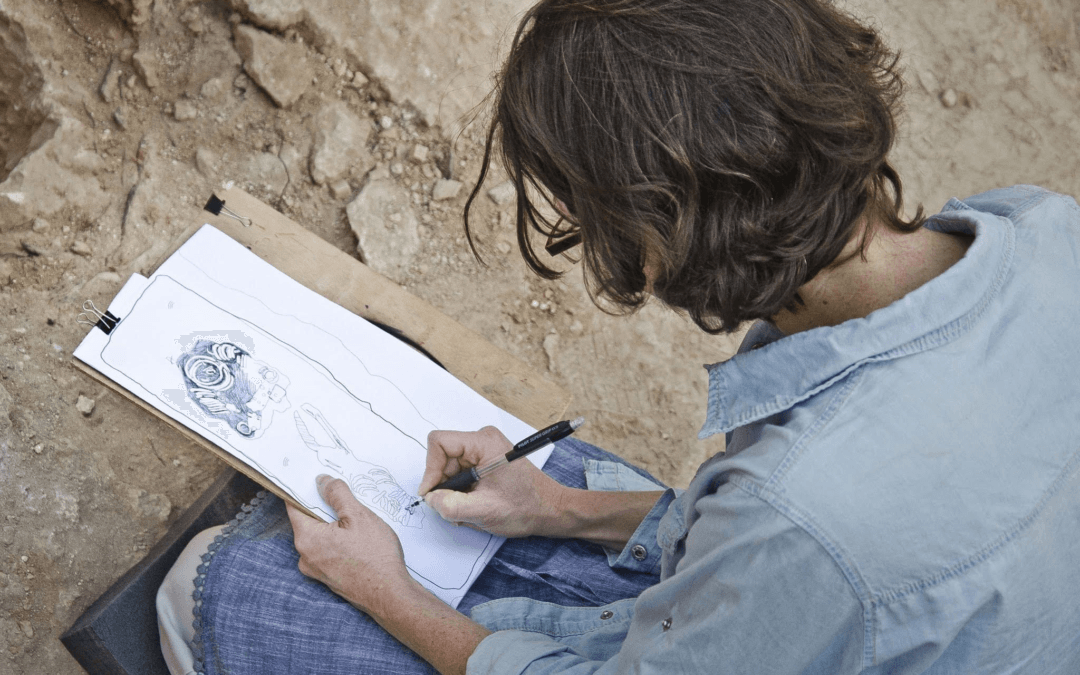
The research reveals how climate fluctuations over the past 230,000 years have influenced the migration of drainage divides in the Negev Desert, shedding light on the dynamic relationship between climate and landscape evolution.
The post New Discovery in the Negev Desert Sheds Light on How Climate Affects Earth’s Surface appeared first on Green Prophet.
Imagine this: an ancient skeleton wrapped in iron chains, buried under a church altar in Jerusalem. Sounds like something straight out of a history book, right? But it’s not just a relic of the past—it’s a powerful reminder of the lengths people once went to for spiritual enlightenment. And get this: it was a woman.
This incredible discovery, made in a Byzantine monastery site just outside Jerusalem, is rewriting what we know about early Christian spirituality—and the role women played in it. Researchers uncovered the remains of a female nun who lived more than a thousand years ago. But she wasn’t just buried with rings and metal discs; she was bound in chains.
But why would anyone willingly put themselves through this kind of physical pain?Back in the 5th to 7th centuries, asceticism—the practice of extreme self-discipline—was all the rage. And it wasn’t just monks. Nuns were doing it too. The idea was that by denying yourself physical comforts, you could elevate your soul to a higher spiritual plane. Think fasting, self-flagellation, and living in uncomfortable conditions.
This isn’t just some weird niche thing. This type of asceticism was widespread, with monks and nuns stretching across the Byzantine Empire, from Syria to Egypt to Italy. And women? Yeah, they were in on it too—often in secret, or disguised as men, because let’s face it: living out extreme spirituality wasn’t exactly considered a “female-friendly” activity back then.
According to Dr. Amit Re’em, Jerusalem District Archaeologist for the Antiquities Authority, “Ascetic nuns represent a fascinating phenomenon worth dwelling on, and even more so – against the background of International Women’s Day, which is marked this week. These literally extra-ordinary women lived and functioned in a rigid male and patriarchal environment, which inhibited their activities.
“In order to take part in the idealistic religious ideals of the life of nuns and ascetics of that time, which were mostly a male domain, of necessity they had to –according to traditions and legends – disguise themselves as men, and live thusly until their death.”
Here’s Where It Gets Even More Interesting:
The skeleton was found wrapped up in chains and bound by iron rings around her arms, neck, and legs. Researchers even found a small cross buried with her. But here’s the twist: she wasn’t tortured. This was voluntary. According to ancient sources, self-inflicted suffering like this was thought to purify the soul and get you closer to God. So, the more you suffered, the more spiritual “points” you scored.
This practice wasn’t just about personal sacrifice. It was about aligning with nature, minimizing distractions, and living sustainably. In the harsh, arid environment of the Holy Land, extreme asceticism was also a way to live simply and in harmony with the land. These monks and nuns didn’t need all the material stuff we’re surrounded by today; they were focused on the essentials.
So, What Does This Have to Do With Us Today?
In today’s world, sustainability isn’t just about saving the planet—it’s about living mindfully and intentionally. And while extreme self-denial might not be everyone’s cup of tea, the core message here is clear: sometimes, less really is more. Just like these ancient nuns and monks, we can find deeper meaning by living in alignment with nature and prioritizing spiritual growth over material gain.
The post Ancient nuns disguised as men: what we learn from their radical faith appeared first on Green Prophet.