by | Mar 6, 2025 | Uncategorized
A recent study in Nature by toxicologist Matthew Campen at the University of New Mexico found that human brain tissue contains significant amounts of microplastics. By dissolving brain tissue samples, Campen’s team was able to isolate up to 10 grams of microplastics...
by | Mar 6, 2025 | Uncategorized
Natural fibers like organic cotton, hemp, and wood-based fabrics such as Tencel and modal offer a safer, breathable alternative to synthetic materials. These fabrics don’t shed microplastics, don’t contain toxic flame retardants, and allow your skin to breathe without...
by | Mar 6, 2025 | Uncategorized
Researchers found a Eurasian coot nest in an Amsterdam canal made of plastic layers spanning 30 years, revealing the birds’ use of human-made materials for nest construction. While reusing plastic may save time, it also poses significant risks, such as...
by | Mar 6, 2025 | Uncategorized
Given the likelihood of a buffer zone along Gaza’s border, an innovative approach could be to transform this space into a greenbelt. Many cities worldwide have successfully implemented green zones that serve as ecological buffers while also benefiting urban...
by | Mar 5, 2025 | Uncategorized
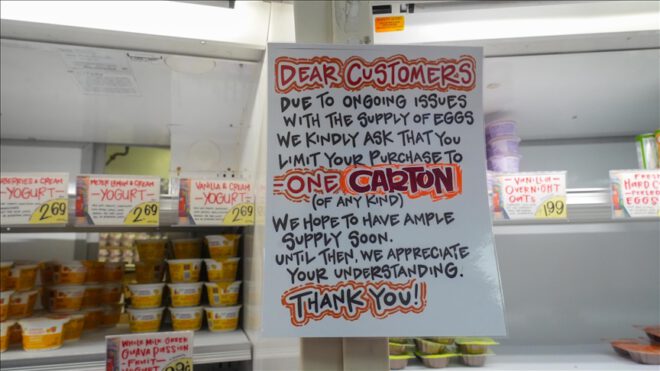
This sign was in a New York supermarket in January of this year. Have you seen one like it where you live? Eggs are scarce these days, and when you can get your hands on a dozen, the price shocks you. According to data from the U.S. Bureau of Labor Statistics, the...
by | Mar 4, 2025 | Uncategorized
This is vernacular architecture from the late 1880s in Northern Ontario. Pioneers built their own homes from a government-supplied blueprint. Is it really vernacular then? Vernacular architecture refers to structures built using local materials, knowledge, and...